GavriniZ: From Images to Words

As the creator of the GavriniZ brand, I am also an author, writing under the pen name Anton Soren.

For several years, my passion for the Neolithic period and megalithic civilisations has inspired both my graphic designs and my writing.

With my collection “Imaginary Chronicles of the Neolithic”, I invite you to travel back more than five thousand years, to discover the builders of Carnac, Gavrinis, Stonehenge and Newgrange, as well as the ancient trade routes of obsidian and jade.

Inspired by archaeological discoveries, these stories blend history, fiction and poetry to bring the women and men of prehistory back to life.

Discover the eight books in the collection below, available in paperback directly from GavriniZ, as well as in paperback and digital (Kindle) editions on Amazon.
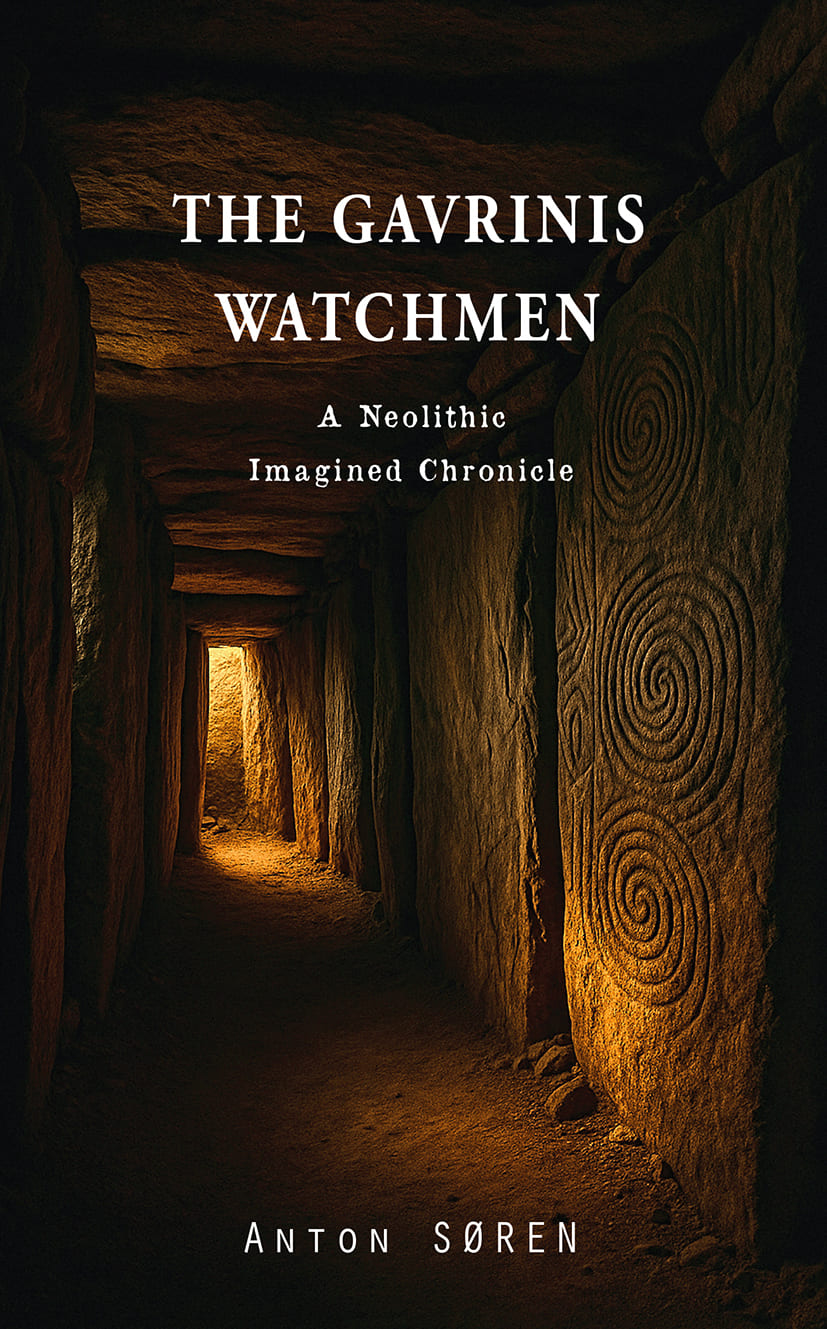
What if the stones had preserved the memory of those who raised them?

Through the fate of Elan, a man confronted with the loss of his loved ones and the upheavals of his surroundings, Anton Soren imagines the birth of a monument destined to endure for millennia.

The story follows the builders of the Gavrinis cairn, explores the mystery of its engravings and traces the gradual transformation of the landscape until the monument’s rediscovery.

Blending an evocation of the Neolithic world with poetry and a touch of the marvellous, this chronicle explores our relationship with memory, death and the traces we leave behind.

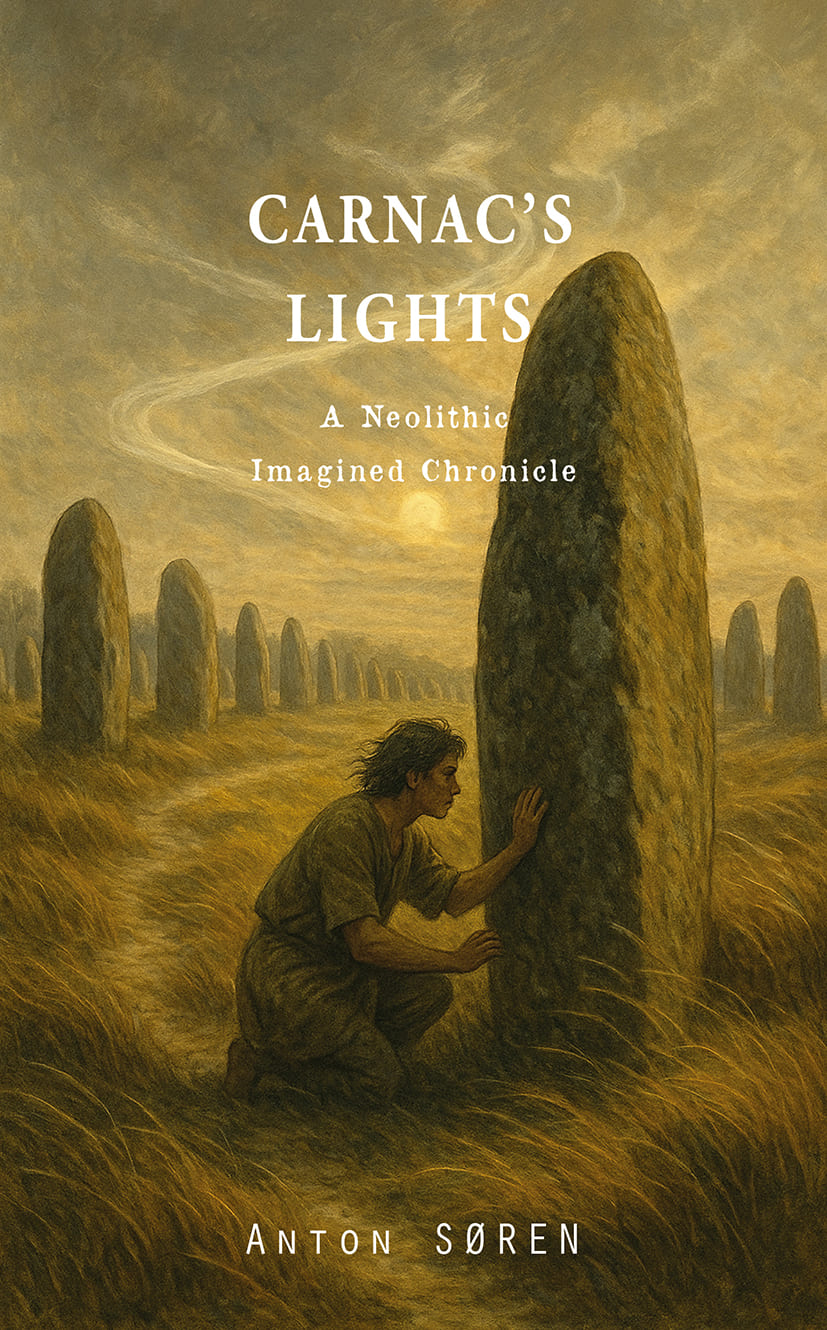
What if the Carnac alignments were a form of writing inscribed upon the landscape?

Through the eyes of Orem, a man attuned to the whispers of the plain, and Arkam, a mysterious traveller who has come from the sea, Anton Soren imagines the origins of the great megalithic alignments of Carnac.

As the stones are raised, light, wind and shadows become part of a collective endeavour whose meaning gradually slips beyond the grasp of those who created it.

Blending an origin story with poetry and imagination, this chronicle explores the relationship between Neolithic societies and the landscape, time and the passing down of knowledge, while leaving the enigma of these ancient monuments unresolved.

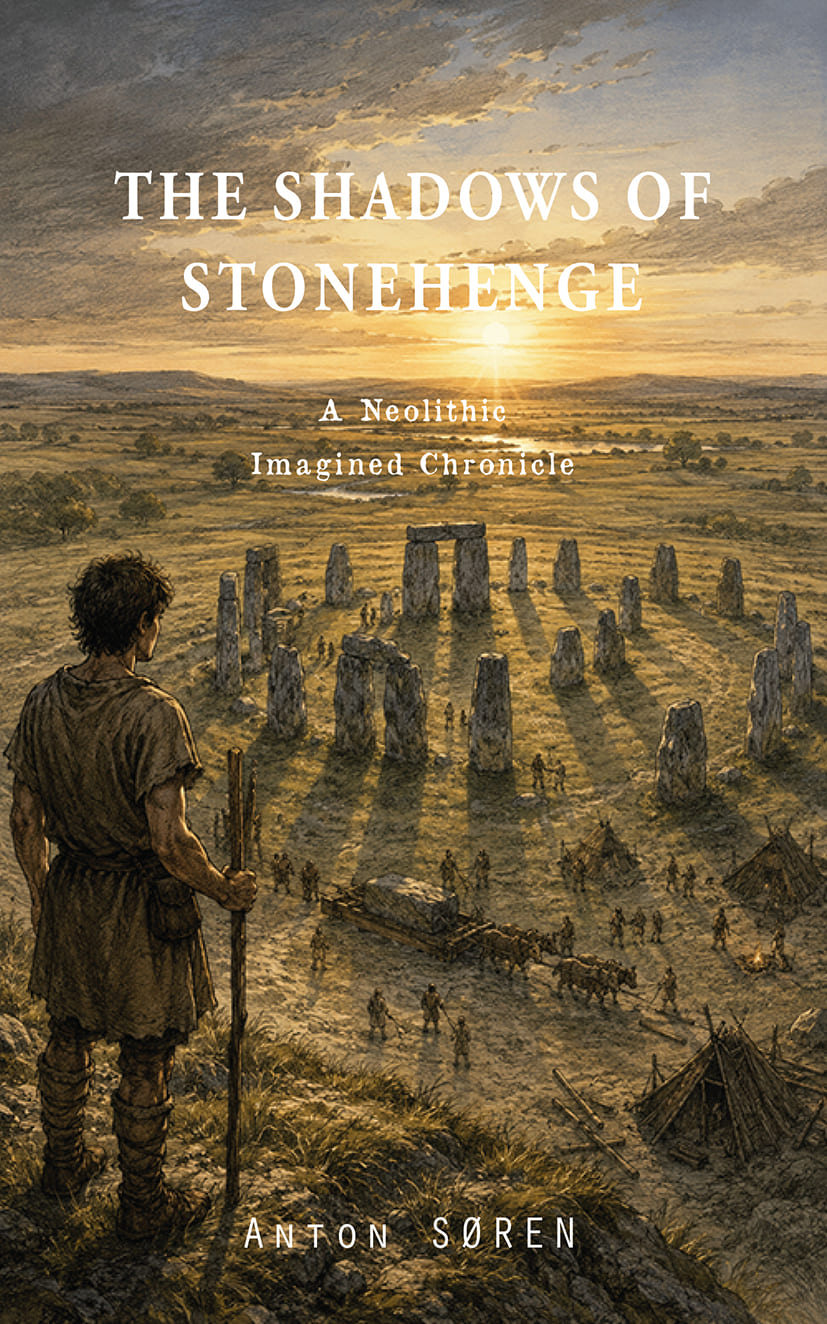
What if Stonehenge had been born, above all, from the human desire to come together?

On Salisbury Plain, Aer watches the sun’s journey across the sky each morning and the slow movement of the shadows. Around him, communities from distant regions gather with the changing seasons, share their knowledge and learn to build together.

Gradually, the first stones are raised. Techniques are refined, generations come and go, and a monumental structure takes shape, though those who began it could never have imagined what it would eventually become.

Through this chronicle inspired by archaeological discoveries, Anton Soren explores the patience of the builders, the power of human encounters and the passing down of knowledge. A thoughtful reflection on the works of humanity that endure through the centuries and ultimately belong to those who come after us.

How can the memory of a man be passed down without passing on his power?

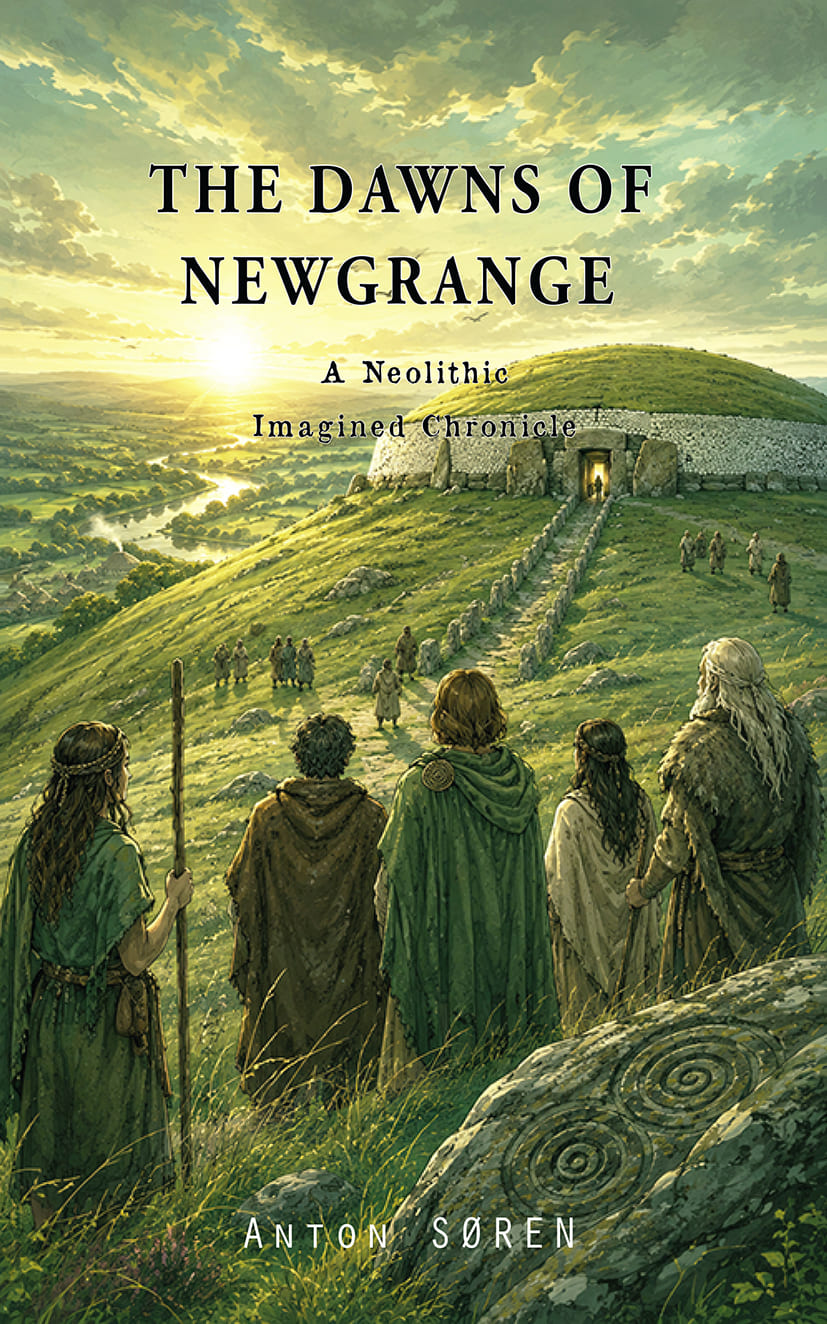
In the Boyne Valley, Ireland, the death of Aedan, a respected figure who had united the region’s communities for decades, leaves behind a fundamental question: how can the bonds that bring people together be preserved when the one who guided them is gone?

Bren and his companions then envision a monument destined to endure for generations. Under the hands of the builders, stones are assembled, spirals take shape, and a long passage is aligned with the rising sun of the winter solstice.

Yet behind the creation of Newgrange lies a deeper question: should a society entrust its future to a single lineage or to a shared memory?

Amid grief, hope and the return of the light, Anton Soren imagines the birth of a monument where architecture becomes the symbol of a collective determination: to build something that will outlive those who first dreamed of it.

How can a stone torn from the mountains become an object worthy of the grandest tombs?

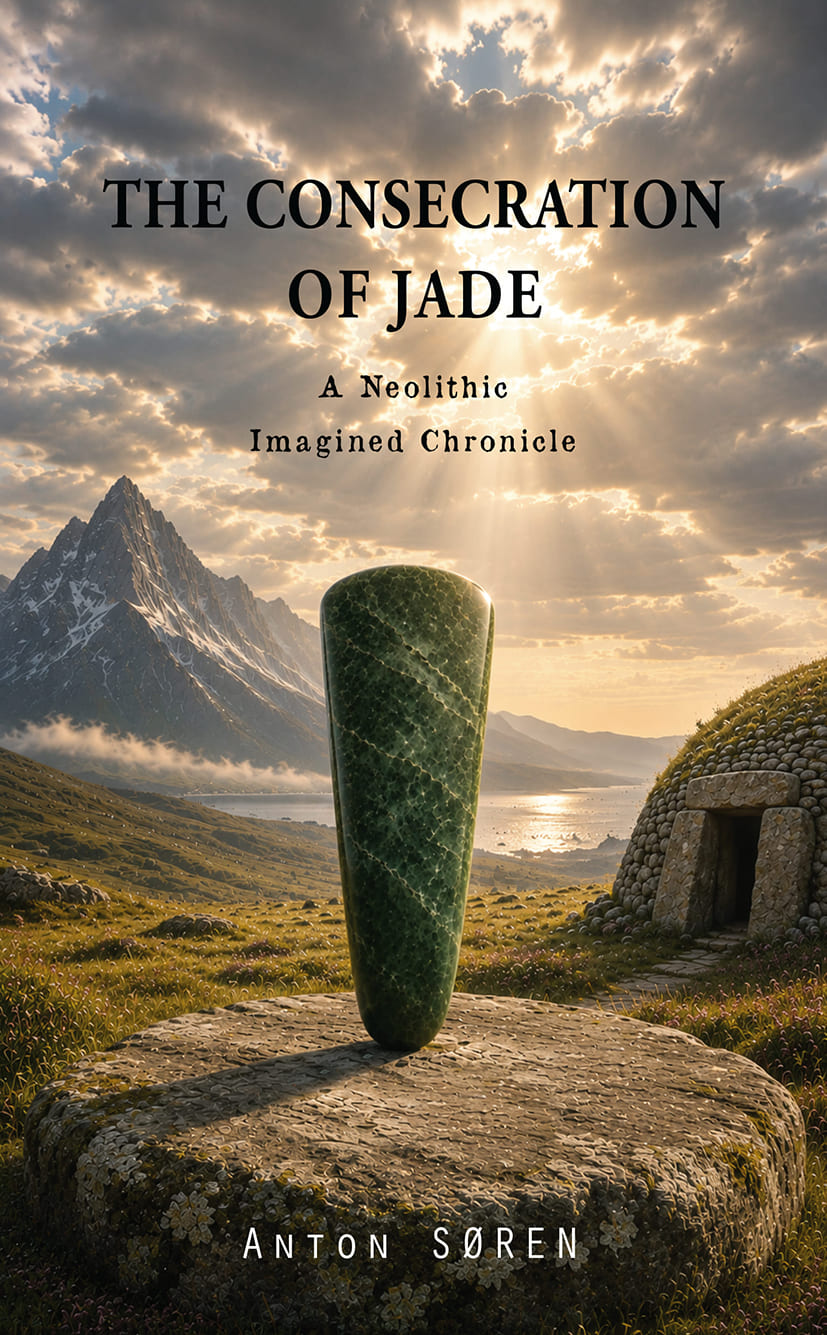
More than six thousand years ago, high in the mountains of Monte Viso, a young boy named Liri discovers an exceptional block of green stone. Through the patient craftsmanship of skilled artisans, the stone is transformed into a large axehead, far too precious for everyday tasks.

But its story is only just beginning.

From valley to valley, from community to community, the axehead embarks on an extraordinary journey westwards. It crosses territories and generations, passing from hand to hand, changing owners and meanings along the way. Each encounter adds to its value, until a simple fragment of mountain stone becomes a coveted object of prestige.

Its journey comes to an end in Brittany, a land of great megalithic monuments, where people raise immense tombs for their dead.

Through the imagined fate of a jade axehead, Anton Soren brings to life the exchange networks of Neolithic Europe and explores the value societies place on objects, power and memory.

A journey in which the stone travels across lands, while human lives are fleeting.

How far can a stone travel when each generation chooses to pass it on rather than keep it?

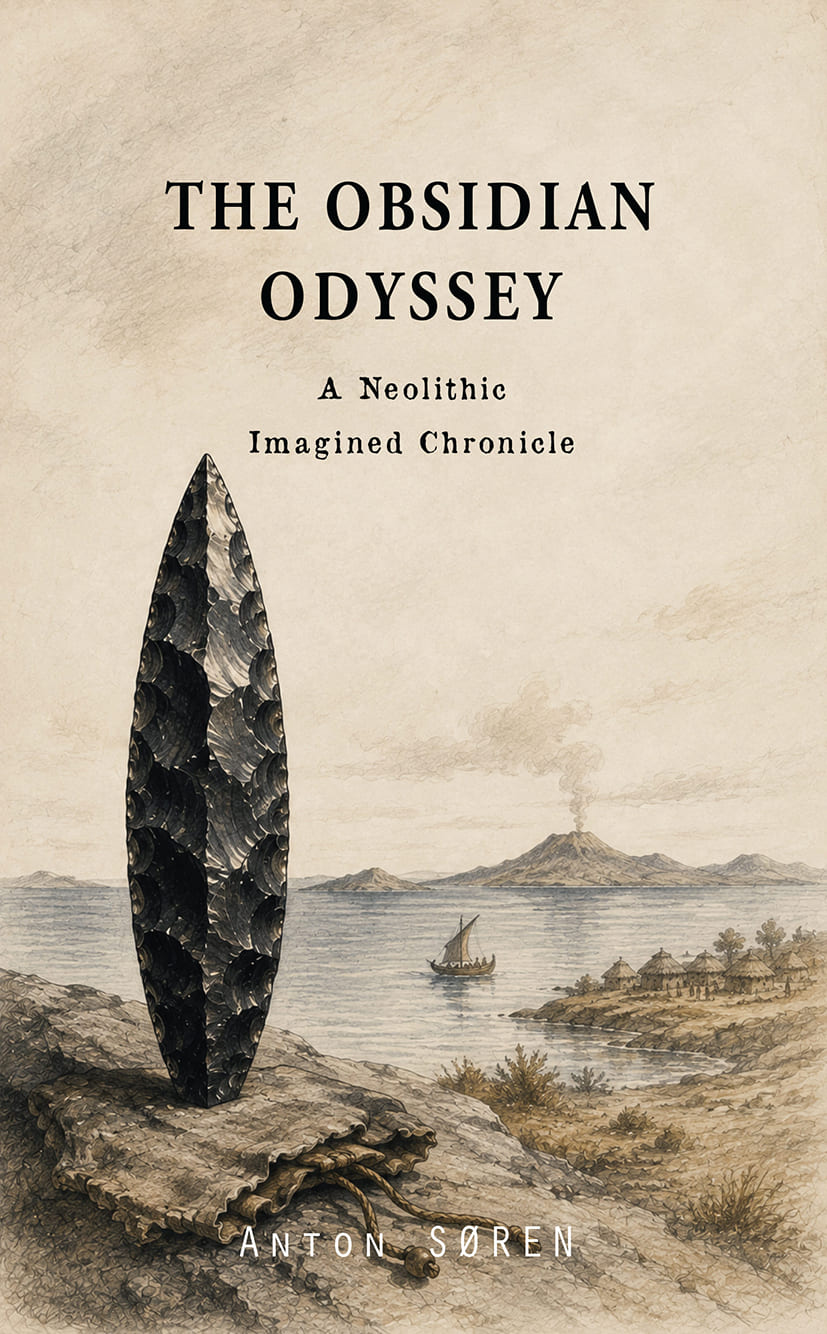
More than six thousand years ago, on the volcanic island of Lipari, north of Sicily, a young boy named Eren accompanies his father in search of obsidian, the mysterious black stone born of fire.

They discover an exceptional block, whose qualities promise to yield the finest blades. But rather than keep it, Eren’s father decides to entrust it to travellers who have come from the sea.

And so begins an extraordinary odyssey.

From island to island, from valley to valley, the precious obsidian core journeys across lands and generations. Seafarers, shepherds and craftsmen take turns carrying it, working it and passing it on. Each removes a few blades, yet takes care to leave those who come after them the chance to continue its story.

Over the centuries, the stone becomes far more than a raw material: it carries the memory of the gestures, encounters and promises of those who have held it in their hands.

Until the day a craftsman realises that its final transformation could secure it a lasting place in human memory.

Inspired by archaeological discoveries concerning the circulation of Mediterranean obsidian, this story takes us along the ancient exchange routes of the Neolithic, into a world where objects sometimes travelled far further than the people who owned them.

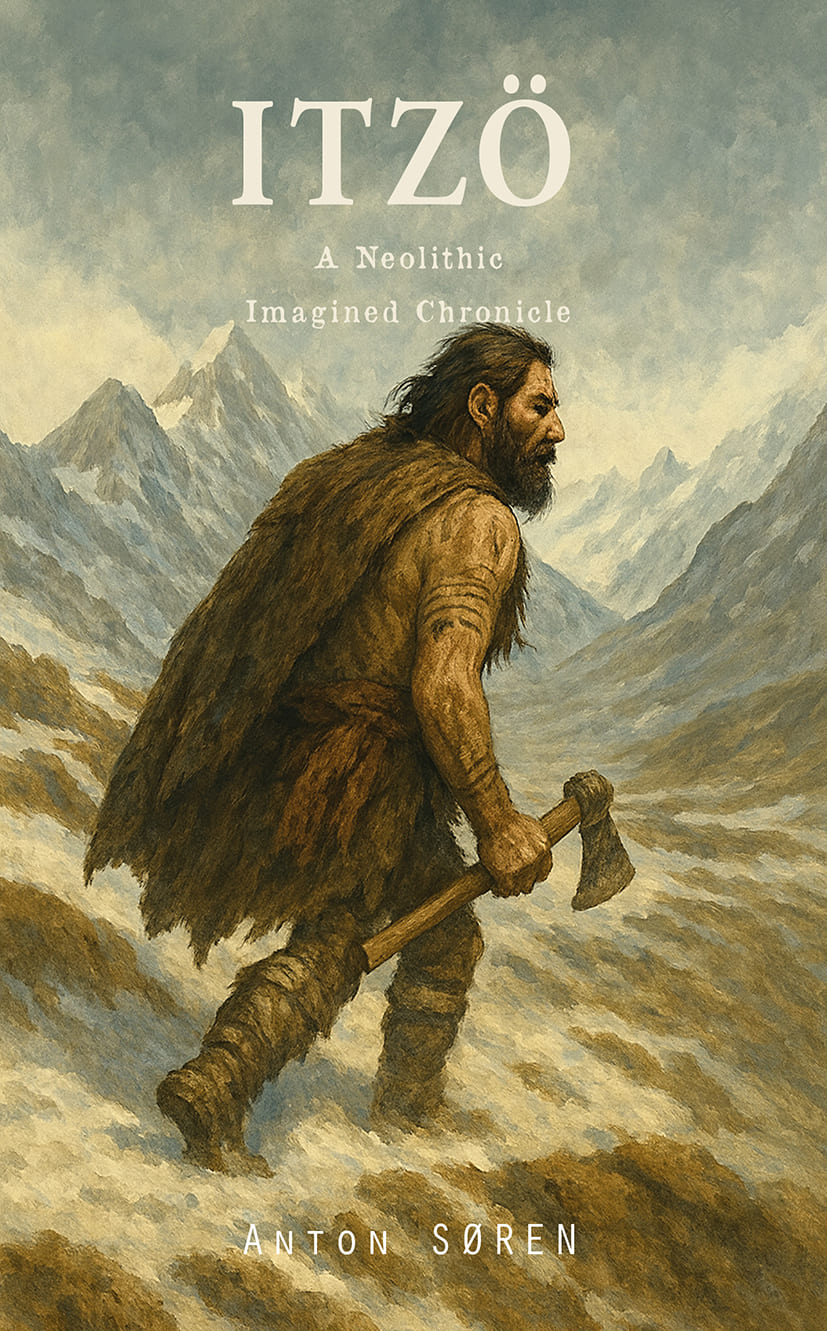
Who was this man whose body lay preserved in the ice for more than five thousand years?

In the high valleys of the Alps, towards the end of the Neolithic, a man named Itzö lives in harmony with the rhythms of the seasons, the herds and the mountains.

A hunter accustomed to crossing high mountain passes, he carries a precious copper axe, crafted by an elderly metalworker from his village. His body, marked by illness and pain, is covered in mysterious tattoos, each a symbol intended to ease his suffering.

But in the valleys, copper arouses envy and greed. A stranger takes a dangerous interest in his axe, while Itzö feels the call of the mountain peaks.

When he sets out on another journey across the mountains, he has no idea that it will be his last.

Inspired by the discovery of Ötzi, the famous ice mummy found in the Alps in 1991, this chronicle imagines the life and final days of a man whose clothing, weapons, tattoos and wounds now provide an extraordinary insight into European prehistory.

Blending adventure, mystery and poetry, Itzö brings this long-lost man vividly back to life, a man whose most intimate traces have been preserved by the ice.

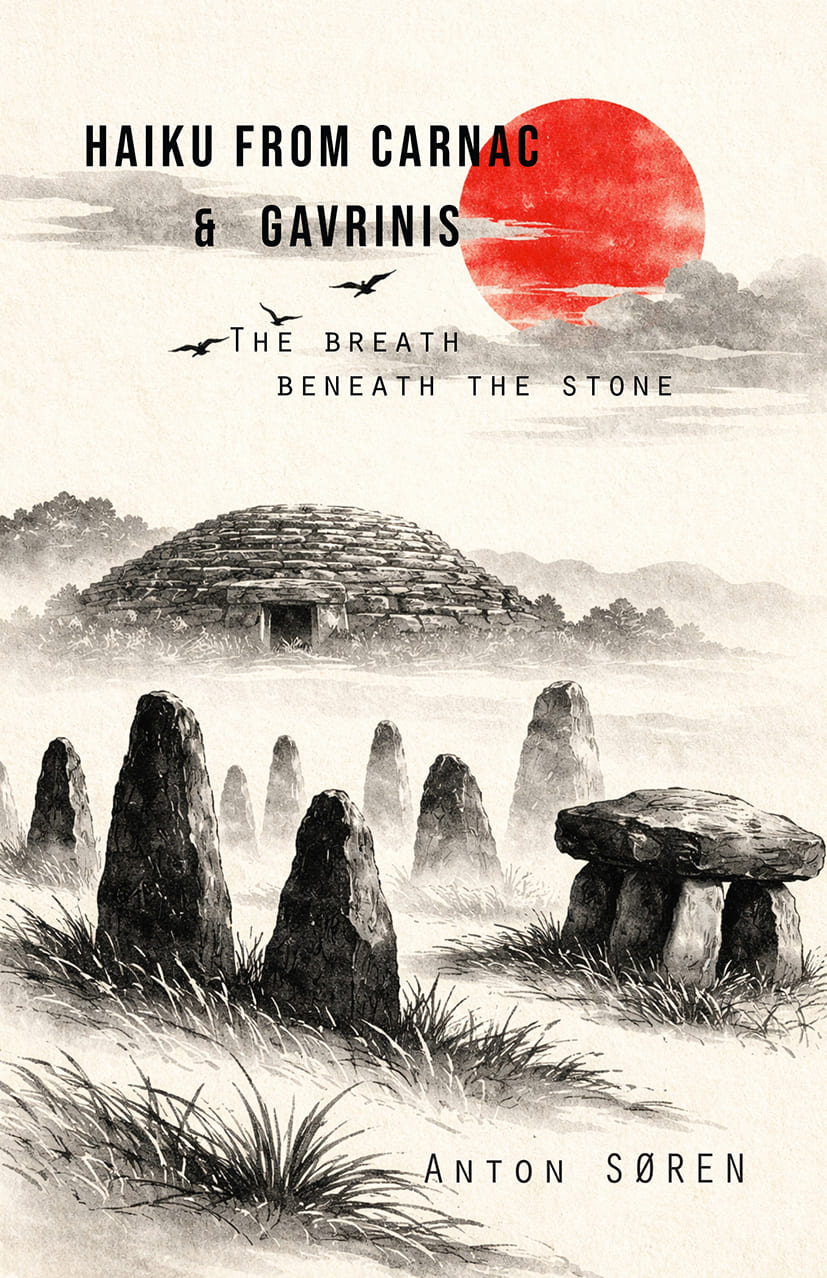
What if the stones of the Neolithic still had something to whisper to us?

At Gavrinis, the engravings lie dormant in the darkness of a funerary monument. At Carnac, the standing stones rise beneath the open sky, exposed to the wind, the light and the changing seasons.

Two emblematic sites of Neolithic Brittany, two ways of inhabiting the landscape and enduring through time.

Through forty-two haiku, Anton Soren invites us on a poetic journey between these two worlds. The first twenty-one poems take us into the intimate world of the Gavrinis cairn, among engraved spirals, shadows and the silence of the stones. The following twenty-one lead us into the heart of the Carnac alignments, where light, wind and the seasons lend the standing stones an almost living presence.

Without seeking to explain the beliefs of Neolithic communities or unravel the mysteries of these monuments, this collection simply invites us to look at what remains with fresh eyes.

A meditation on stone, time and memory, where just a few words can sometimes evoke the breath of thousands of years.

If you want to know more, please contact me via the contact form.

Do you want to contact Gavriniz?

Go to the contact page of Gavriniz